
Build one collection from the parts you know.
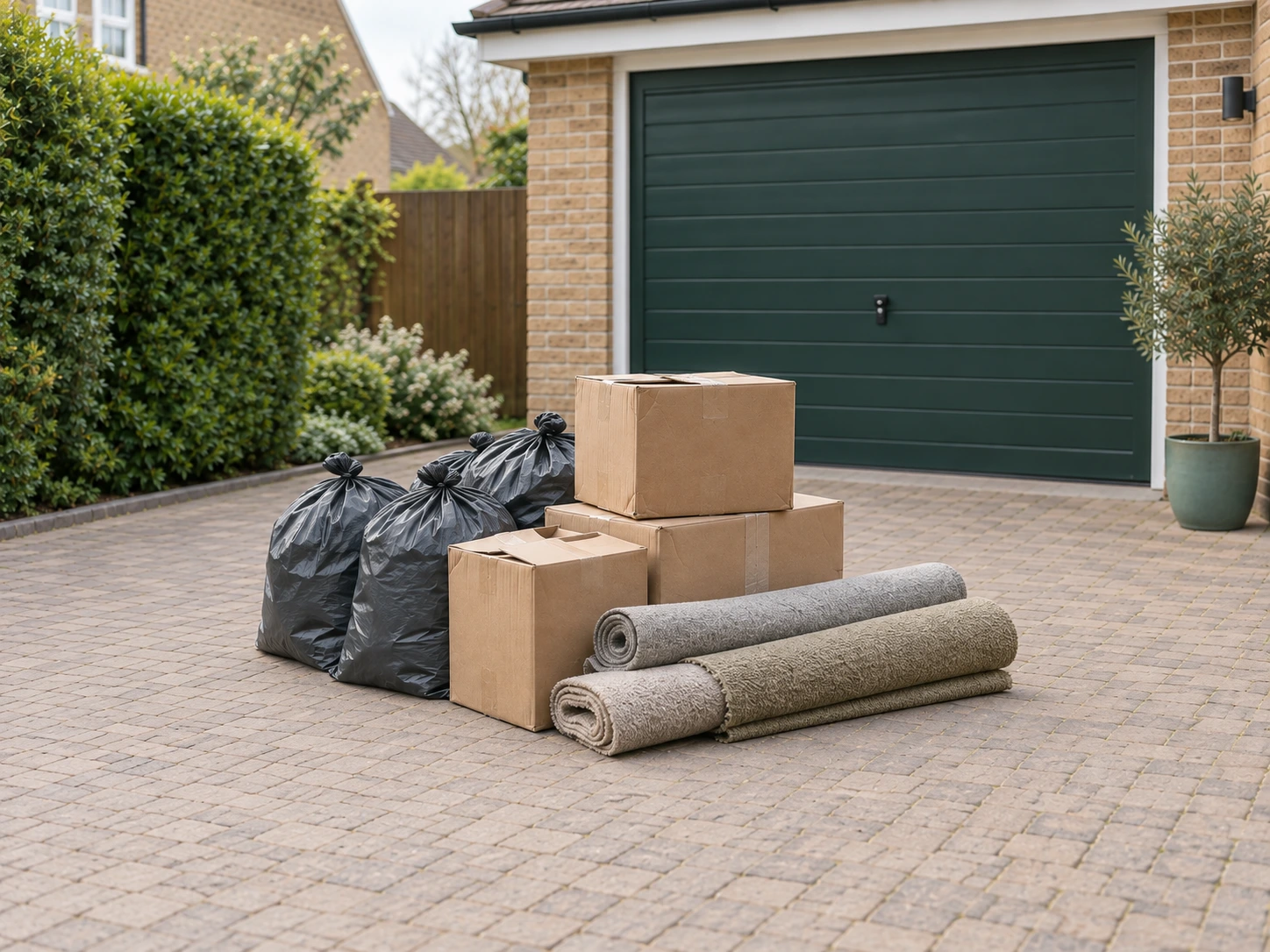
Separate identifiable furniture or appliances from the remaining pile in your description. If a wardrobe appears in a photo and on your item list, it is still one wardrobe. Describe only the bags or loose material left around it as the pile.
If you have just a few known items and no loose pile, use the small-clearance checklist instead. Several suitable items can be quoted together; there is no need to create a separate request for every category.
Useful next steps
Give a useful size description.
Tell us whether the remaining waste is bagged, boxed or loose. Rough dimensions can help if they are easy to judge, but you do not need to climb over the pile or move things to measure it.
Photos should show the whole collection and another angle if items hide each other. AI may suggest items and collection size; check and correct the suggestion. Photos cannot reliably reveal weight, hidden contents or every material. A written description is always an option.
A description you can adapt
“One wardrobe and an armchair are listed separately. Around them are six bags of clothing and loose cardboard, roughly two metres long by one metre deep, below waist height. Some bags at the back are hidden, so the amount is uncertain. Everything is in the ground-floor garage, with a short level route to the drive. Keep the bikes and shelving.”
Use your own facts; this example is not a load size or price band. Add dense material, electricals, restricted access or unknown containers if present. If the photo and description disagree, correct them before accepting the suggested size.
A small heavy pile can be a different job.
Cardboard, garden cuttings, timber, soil and rubble should be identified separately. Two piles that look similar in size may involve very different weight and handling. Keep uncertain amounts marked as unknown rather than supplying a confident guess.
Mention appliances, upholstered furniture and electrical items among the rubbish. A single collection request can contain different types, but their acceptance and handling still need checking. The material description matters as much as the chosen size.
Explain anything unusual without investigating it.
Tell us about chemicals, liquids, batteries, sharp objects, suspected asbestos or containers you cannot identify. These are not automatically accepted as mixed rubbish. Some require a specialist route.
Leave unknown material undisturbed. Do not open containers, handle sharps or break items apart to find out what is inside. A description of what you already know is enough to raise the question before a collection is agreed.
Describe where the rubbish is now.
Include the floor, stairs or lift, gates, narrow paths and legal loading access. Explain any carry through the home or a long distance to the vehicle. You do not need to bring heavy items outside to ask for a quote.
The total depends on the complete contents and work. Uncertain material, missing amounts or difficult access may need further checking. If more waste appears after the quote, update the request before the visit so the price and collection plan still match.
Compare alternatives that fit your situation.
You may be able to divide the job between confirmed reuse, eligible council items and a recycling-centre visit. Check the council comparison for the practical steps and any remaining waste; a free route for one piece does not automatically clear the whole pile.
If paid removal fits, the service page explains what can be included. Confirm accepted contents and access before the price and date are agreed. With WeMovers, payment is due on completion and every collection receives a waste transfer note.
Useful next steps
Your next steps
- List furniture and appliances separately from the remaining pile.
- Describe material types as well as the amount.
- Mention access, stairs and the distance to loading.
- Flag unknown contents without disturbing them.
Describe the whole collection, including any named items, remaining pile and access. Keep uncertain contents or amounts marked as unknown.
Get my rubbish removal quoteSee your options before deciding. Nothing is booked yet.Common questions
What if I have no idea how much rubbish there is?
Describe the visible contents and mark the amount unsure. Photos may help, but you can continue without them; more detail may be needed before a total is confirmed.
Can I add a sofa or washing machine?
Include it as a separate named item, alongside the remaining rubbish. Describe connected appliances and unusual condition; adding an item does not automatically confirm acceptance.
Does an AI photo result book a collection?
No. It is a suggestion for you to check. Collection details, price and availability still need agreement before the job is booked.
Sources and further reading
Checked 12 October 2026. Follow the source links for current acceptance rules and local arrangements.