
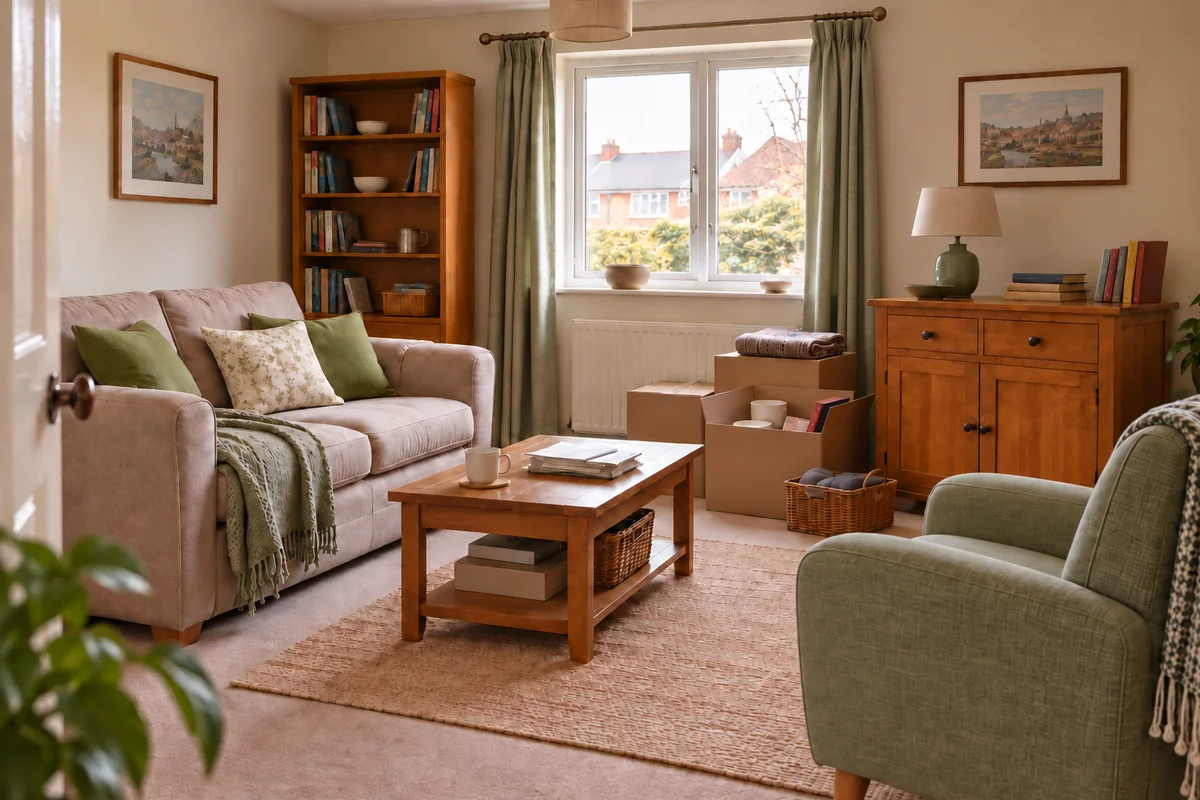
What does a house clearance involve?
The agreement should name the rooms, items and loose contents to remove. You might clear two bedrooms and a garage while leaving the living room untouched.
Ask separately about fixed fittings, disconnection, dismantling or cleaning. “Full clearance” does not mean every material is accepted or furniture will be moved to another address.
House clearance in five stages
- Decide what goes and what stays
Keep undecided belongings outside the removal instructions.
- Describe the contents and access
Include loose contents, unusual items and the route out.
- Agree the work, price, date and contact
Confirm who provides access and can answer questions.
- Confirm instructions and remove the agreed contents
Check what is leaving and what must stay before loading.
- Check the completed work and retain the records
Check the agreed areas and keep the collection documents.
Paid clearance, charity collection or selling items?
Separate belongings that a confirmed recipient wants from the unwanted contents still needing removal. Selling or donating a few pieces may reduce that remainder; it does not settle how the rest will leave.
British Heart Foundation offers two different routes: free collection for accepted saleable furniture/electricals, and a charged house-clearance service for broader contents. Use its official pages to check the postcode, criteria and arrangement you actually need. WeMovers is independent of BHF.
Useful next steps
Will a clearance company pay for the contents?
Some providers handle saleable contents as well as clearance, but the money can flow in different directions. A paid removal quote is not an offer to buy your belongings. Ask which of the arrangements below is actually being proposed and get it in writing.
For example, Chelmsford Auction Rooms describes selling contents at auction and different ways of accounting for removal costs. That illustrates a provider-specific arrangement, not a guaranteed value for your contents or a WeMovers service. WeMovers provides paid clearance and does not buy contents or promise a credit for resale value.
Make keep, clear and undecided belongings obvious.
If you can, set aside papers, keys, photographs and valuables. Mark items and areas to remain untouched. For a family property, agree who can authorise decisions; the collector cannot settle disagreements.
Rough item counts, a room description or safe photos can start the quote. Include loose contents as well as furniture. Do not climb into inaccessible spaces or disturb unknown materials to complete the list.
Useful next steps
Agree the complete price and a real collection date.
Describe the agreed contents and access so providers can quote the same work. Check whether an amount is an estimate or confirmed total, what is excluded, and how additions will be priced. A room count alone does not describe everything inside it.
Agree the available date and access arrangements before relying on them for a handover. If you want the WeMovers service, check its scope and quote route; a preferred date or enquiry does not make a booking.
Useful next steps
Do you need to be there?
Agree who will provide access, confirm the scope and check the result. If you are arranging the clearance from another address, ask about a nominated contact or key arrangement rather than assuming an unattended visit is possible.
Agree retained-item instructions, key return and how the property will be secured. Give the person on site any updated instructions before work.
What happens on collection day?
Confirm the agreed items and anything staying before removal begins. Check the cleared areas against the scope when the work is finished, or nominate someone to do that for you. Cleaning, repairs and moving retained belongings elsewhere should not be assumed included.
With WeMovers house clearance, loose debris from the clearance is swept up; deep cleaning is separate. Payment is on completion. A waste transfer note can be provided; confirm any records you need when arranging collection. The How it works page explains the WeMovers experience in more detail.
Useful next steps
What happens to the belongings afterwards?
The route depends on the items, their condition and suitable receiving facilities. Do not assume every item will be donated or recycled. Ask about any particular destination or records you need before booking.
For a private household waste collection in England, check the appropriate waste-carrier registration. With WeMovers, a waste transfer note can be provided; confirm your paperwork requirements before collection. Keep it with the quote and payment records; it is not a guarantee of a particular recycling outcome.
Useful next steps
Your next steps
- Identify belongings to keep and decisions still outstanding.
- Confirm who has authority to arrange removal.
- Describe the contents, access and any unusual materials.
- Agree the price, collection date and handover arrangements.
Describe the rooms, contents and access, including anything that must stay. We’ll review the scope and confirm what is included.
Request my house clearance quoteSee your options before deciding. Nothing is booked yet.Common questions
Do house-clearance companies take everything?
Only the agreed contents that can be accepted. Unknown, hazardous or specialist materials may need separate arrangements; fixed structures and additional work should not be assumed included.
Can I get a free house clearance?
Suitable items may qualify for free charity collection, but check the criteria and remaining waste. WeMovers is a paid service; its quote does not include buying or valuing contents.
How long will a house clearance take?
It depends on the amount, access and work involved. WeMovers gives an expected timeframe with the quote once the job is understood; a room count alone is not a reliable timetable.
Sources and further reading
Checked 13 October 2026. Follow the source links for current acceptance rules and local arrangements.
View all 5 sources
- British Heart Foundation: house clearance service (opens in a new tab)
- British Heart Foundation: free furniture collection criteria (opens in a new tab)
- GOV.UK: disposing of household waste (opens in a new tab)
- Chelmsford Auction Rooms: example of auction and clearance arrangements (opens in a new tab)
- Clumber Auction House: example of sale or outright purchase arrangements (opens in a new tab)