
Check the replacement retailer first
If a replacement is coming, ask the retailer about like-for-like take-back and whether its home service includes disconnection or removal from fittings. Free in-store take-back does not mean free transport from your home.
For an appliance that may be reusable, check a charity’s current item exclusions as well as condition. BHF’s postcode form is one way to ask about a donation; a working appliance is not automatically accepted. Council collection is another route to check before arranging paid removal.
Useful next steps
Make a short appliance list
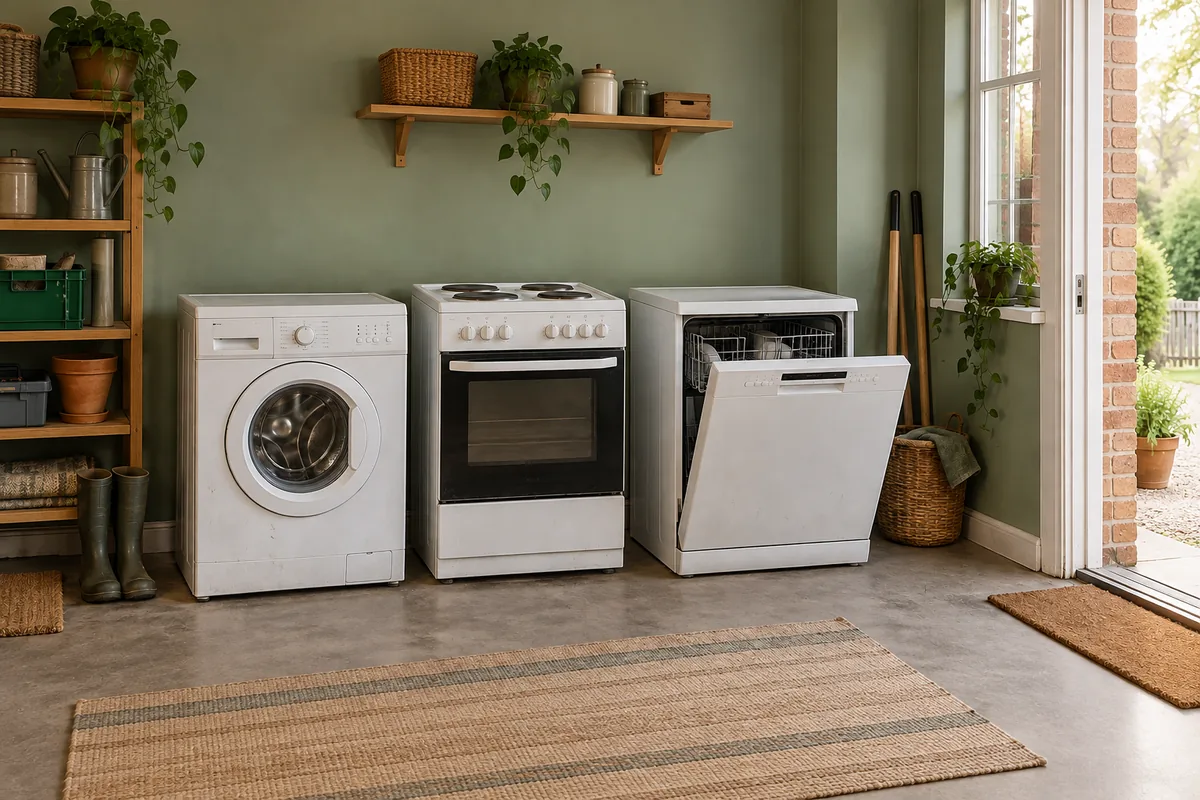
Include the type and quantity: washing machine, dishwasher, tumble dryer, cooker, microwave or other appliance. Identify fridges and freezers separately because their handling differs. Mention a large range cooker, stacked unit or unusual size.
A model number is useful if already visible but is not needed to begin. Photograph the appliance in place; do not pull it out or reach behind it for a label.
Arrange disconnection before removal
A collection booking is not automatically a plumbing, electrical or gas-work booking. Say what is connected so the right preparation can be agreed.
- Gas cooker: do not disturb the gas pipework yourself. Use a Gas Safe registered engineer qualified for the appliance.
- Hardwired oven or hob: arrange a competent electrician; do not cut cables to free it.
- Washing machine or dishwasher: mention water and drainage connections. If you cannot disconnect it safely, arrange suitable help rather than forcing hoses or valves.
Built-in appliances need another look
A cupboard door, plinth or worktop can affect removal even after an appliance is disconnected. Describe these fittings and say what should remain. Cabinet alteration and installation of the replacement are not part of an ordinary collection estimate.
Also note the floor, lift, steps and narrow turns. A kitchen photo and an access photo can explain these without moving the machine. If a lift needs booking through the building manager, arrange that alongside the collection date.
Empty what you can safely reach
Check for laundry, dishes and belongings inside. Once safe disconnection is arranged, follow the appliance’s manual for any remaining water or loose parts; do not tip a heavy machine to drain it yourself.
Clear small obstacles where practical and keep children and pets away from the work area. Tell us about leaks, broken glass or damaged parts so the handling can be considered before arrival.
When you need paid appliance removal
Check the appliance collection service before requesting paid help. Include each machine’s location and connected or fitted status: a disconnected washing machine and a dishwasher still attached to kitchen fittings are not the same preparation job.
You can ask for collection while disconnection is still being arranged. The agreed scope must say which preparation is yours and whether any additional work is included. Review that before booking.
Useful next steps
Your next steps
- List each appliance and whether it works.
- Mention water, gas, hardwired electrical connections or fitted cabinets.
- Describe stairs, tight openings and the route to parking.
- Leave heavy appliances in place while you get the quote.
List every appliance, its connections and the route out. You can request a quote before preparation is complete; agree what needs doing before collection.
Request my appliance quoteSee your options before deciding. Nothing is booked yet.Common questions
Do I have to switch on an old appliance to check it?
No. If its condition or safety is uncertain, describe it as untested. You do not need to demonstrate it working to ask about removal.
Can I ask for a quote while it is still connected?
Yes. Tell us whether it is fitted or still connected and explain what is needed. That does not add disconnection to the collection automatically.
Can the fridge go with the washing machine?
Yes, you can request both in the same collection. Add the fridge separately with its type, size and fitted position so its handling is included.
Sources and further reading
Checked 12 October 2026. Follow the source links for current acceptance rules and local arrangements.
View all 5 sources
- GOV.UK: electrical retailer take-back and transport charges (opens in a new tab)
- Gas Safe Register: who can work on a gas appliance (opens in a new tab)
- Electrical Safety First: advice about electrical DIY (opens in a new tab)
- BHF: check your area and request a free donation collection (opens in a new tab)
- GOV.UK: bulky-item collection lookup (England and Wales) (opens in a new tab)